London Fashion Week SS27 | London's emerging designers set the rules
This article was written by Demi Karanikolaou for Harper’s Bazaar Greece. You can find it here.
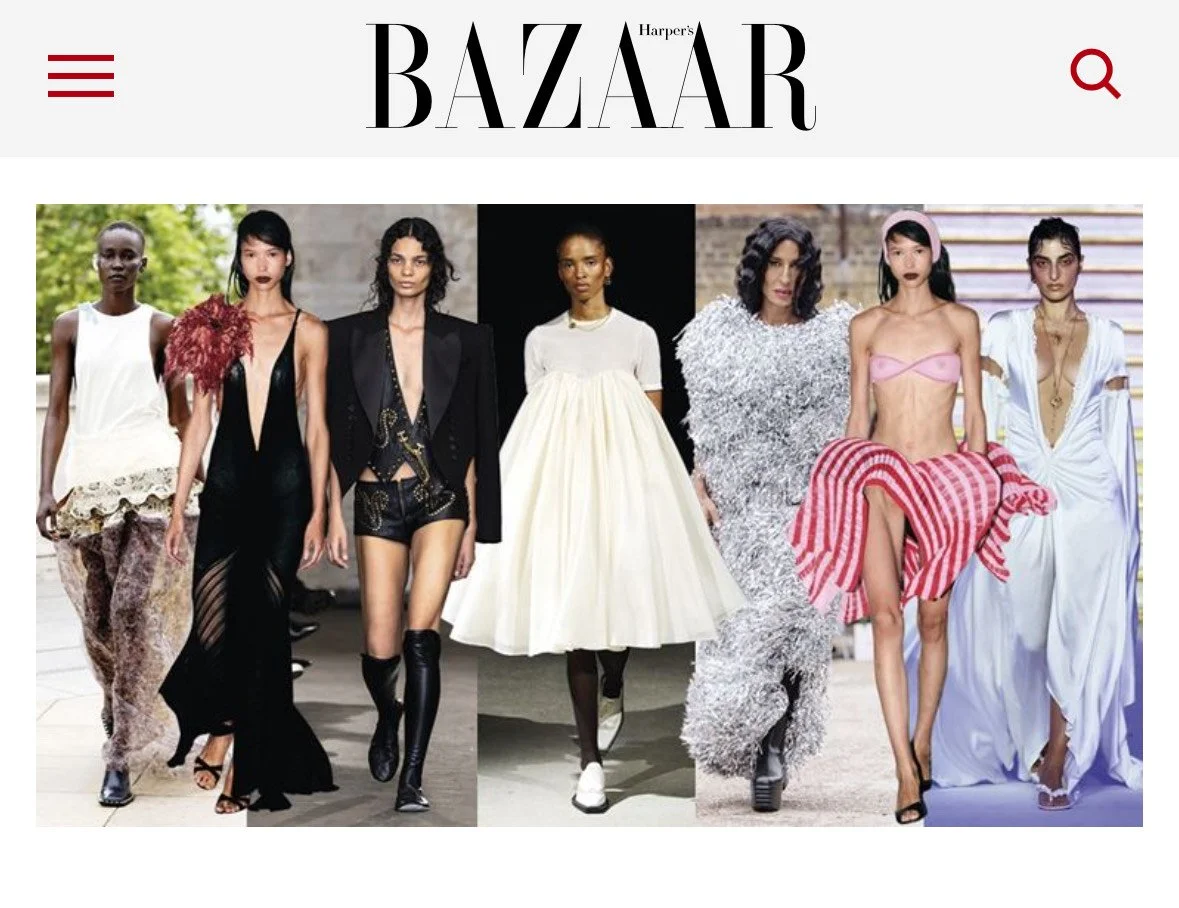
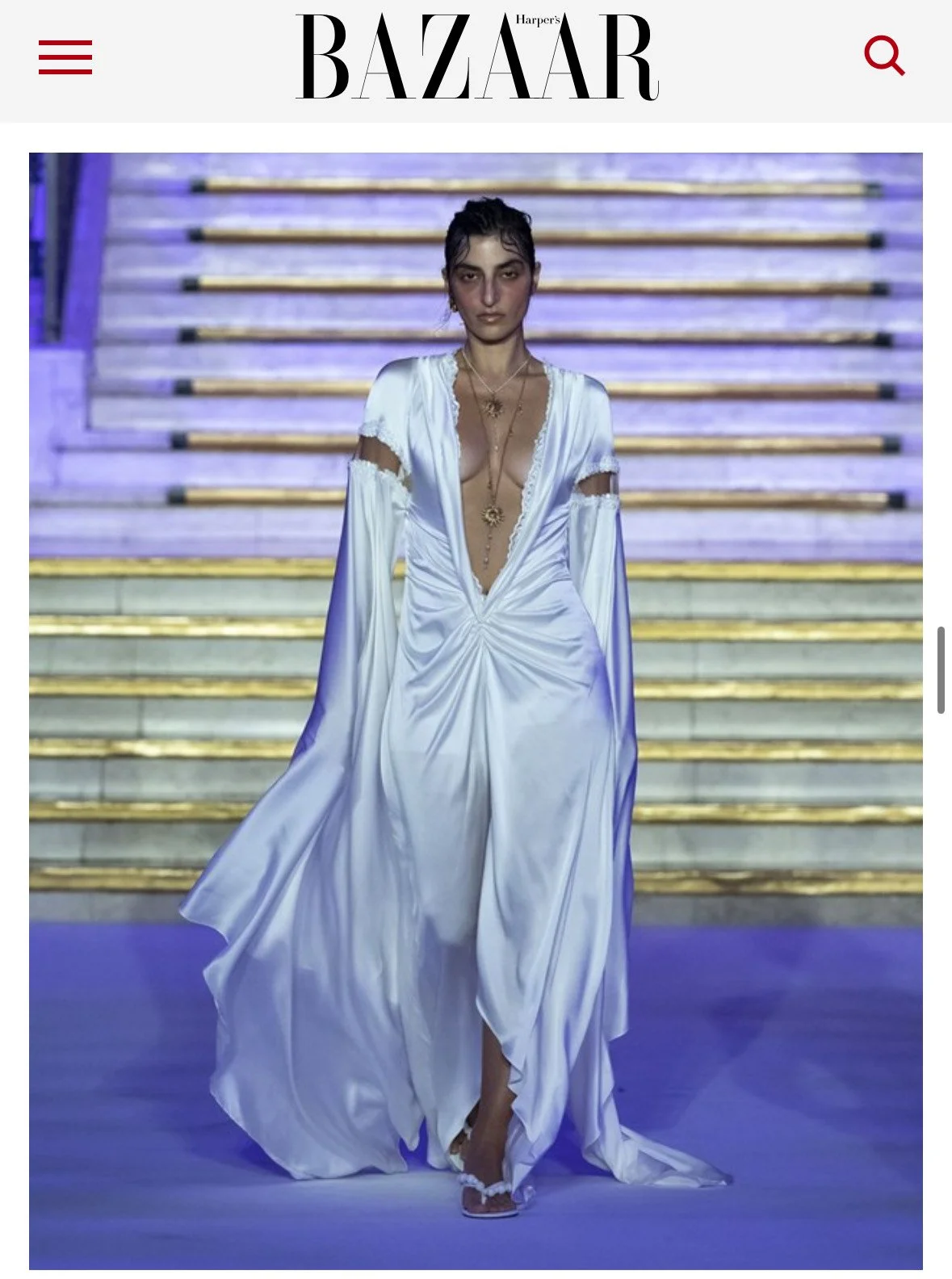
London Fashion Week is experiencing a renaissance. With McQueen’s return, Christopher Kane at the helm of Mulberry and Burberry having finally weathered the storm of 2024/25, the British capital’s fashion scene is beginning to flourish again - something that was evident amongst the industry crowd during the recent SS2027 shows in September. Yet, for all the big names, London remains one of the best places for emerging designers and fresh talent. At a time when the industry quite often seems to be chasing the same aesthetic, London offers a safe haven for designers to be eccentric, deeply personal and, occasionally, completely unpredictable. One thing was quite evident, though: while some of the most revered up-and-coming brands of recent years are evolving into quite established businesses, London’s true strength still lies in its ability to identify and nurture the next generation of promising designers before anyone else.
At London-based Chinese label Mithridate - which delivered one of the season’s strongest collections - creative director Daniel Fletcher looked for inspiration in the "New Romantics" movement and 1980s London. Those references translated into military details, sharp tailoring, corsets, statement scarves, rugby jerseys and dramatic accessories. And while there were some voices claiming that the house sticks to its preppy side a little too often for their liking, industry insiders credit Fletcher with building a consistent, recognisable design language for a label that is still relatively young. Up close, the clothes demonstrated clear artisanal construction, presenting a true take on a complete wardrobe: highly wearable, everyday pieces sitting quietly next to absolute showstoppers. The proportions of the garments themselves swung between oversized and micro; the looks were styled with flats, kitten heels and more casual shoes, worn even with the most dramatic dresses, giving the collection an unexpected, thoroughly modern flair.
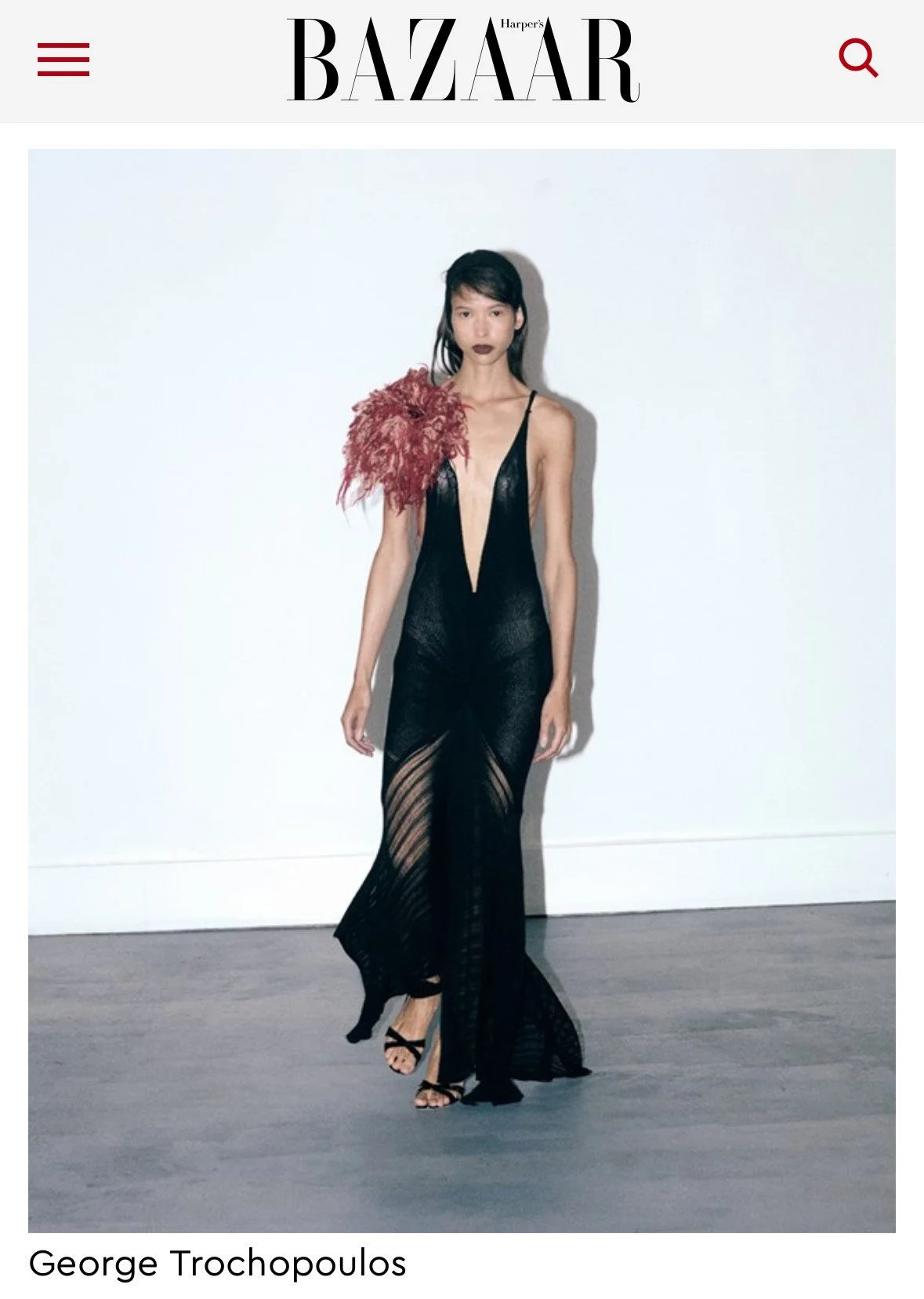
In a very different setting, at Caroline Issa’s TANK space, Greek designer George Trochopoulos already proved that he was ready to step into the next chapter of his career. The presentation had a tightly curated crowd of fashion insiders and that elusive, in-the-know feeling that you were witnessing someone destined to be the centre of future conversations. Trochopoulos leaned into retrofuturism and the early days of his label, when he first started creating and selling garments shortly after graduating, using this collection as an intentional way to close his first chapter while elevating his signature codes. His knitwear pieces became even more sculptural and mature, featuring bold colours, sheer details, petal skirts, and his distinct necklines that completely define the Trochopoulos silhouettes. Beyond the garments themselves, the oversized flower brooches instantly stood out as one of the week's biggest obsessions. Carrie Bradshaw would have been over the moon.
Flower brooches also appeared at Japanese label TOGA Archives, where statement pieces blended beautifully with actual practicality. Yasuko Furuta drew inspiration from the heatwaves of Europe and how they contrasted with Tokyo summers, where layering remains part of the city’s way of dressing despite the humidity. The collection moved between those two extremes, blending sportswear and functionality with a fiercely fashion-forward aesthetic. The result was harmonious, with unique proportions, clean lines and small flashes of sparkle hidden in unexpected places, such as under the sleeves.
At Di Petsa, the Greek designer proved once again why her brand has become one of LFW’s most coveted tickets. Her Holy Milk collection explored motherhood - not just as a biological reality, but as a continuous process of self-creation and rebirth. Her iconic wet-look creations graced the runway alongside effortlessly modern pieces, sheer fabrics, lace, and body-conscious silhouettes, which evolved perfectly into breathtaking red, deep blue silk and gold looks for both men and women - walking a fine line between purity and sensuality. In an imposing, grand venue in the City of London, Dimitra Petsa did what she does best: seamlessly merging fashion with performance art. Pregnant women, mothers, water, and a custom bra that literally released milk into the room transformed the Banking Hall into a sacred, almost ritualistic space.
At the completely opposite end of the spectrum, emerging designer Grete Henriette made a very mindful decision this season to step away from commercial pressure and align her brand more closely with the art world, challenging the very notion that a fashion collection has to be a product. Opting for a presentation format inside a church rather than a traditional runway, she told me, "I want to focus more on the art rather than the pressure of selling clothes." In her Mourn collection, the embellished thong underwear she had designed was presented as art objects, framed almost like relics and treated as symbols of femininity, sexuality and the transitions in a woman’s life. Greek model Marianna Karapanagioti appeared as a high priestess, praying in a striking custom-made veil with shimmering embroidery. The collection explored the body and purity culture while celebrating female creativity.
Emerging brand Keburia also ventured outside its usual repertoire this season, opting for sharp tailoring, oversized details, micro shorts, Western and equestrian references, metallic tweed, metal studs and, once again, flower brooches. Finally, at POET-LAB, Giuseppe Iaciofano returned to the idea of memory as part of identity with his "Remember" collection. Using Albania and the personal history of model Elton Ilirjani as his starting point, he delivered his well-known oversized, architectural, and entirely genderless silhouettes. The futuristic silver gown that closed the show stole the spotlight, with many attendees praising the collection's cohesiveness and noting how easily some of the looks could be used for a red carpet. Iaciofano’s approach to deconstruction has indeed been drawing attention within the fashion circles of London over the past few seasons.
The common thread weaving through London Fashion Week this season was not so much a specific colour, hemline, or silhouette as the designers' profound need to tell their unique and unapologetic stories - using memory, the body, motherhood, identity, or even the outright rejection of commercialism as their starting point. The fact that some of the most fascinating shows of the season did not come from the big heritage brands speaks volumes about London’s true position in fashion: the city remains one of the very few places where a creator's raw emotions, personal history, and quiet obsessions can still be translated into collections that do more than follow the rest of the industry: they try and push it forward.