
Fashion Travel in Barcelona: The Cult Brands Conquering Global Street Style
This article was written by Demi Karanikolaou for Vimagazino / To Vima Greece - print & digital here
"I like to observe how people are walking, what they are wearing, the ease they have when strutting across the street," I said to my friend while sipping an iced coffee, sitting in one of Barcelona's most popular plazas. Indeed, few pleasures come close to people-watching for a fashionista when visiting one of Europe's most vibrant hubs, where life is lived effortlessly outdoors. Think flowing dresses, impeccable Spanish leather goods, and footwear that allows the wearer to comfortably navigate the city's iconic blocks while looking completely chic. In between the exquisite heritage architecture of Antoni Gaudí and Lluís Domènech i Montaner, the Michelin-star restaurants offering fusion plates inspired by Catalan cuisine, and the carefree atmosphere that makes everyone fall in love with the city, Barcelona also has much to offer from a fashion perspective. On a self-imposed mission, I set out to discover the top labels offering a fresh take on Spanish design, craftsmanship, and aesthetic. What I discovered made me view Barcelona as one of the great emerging fashion capitals of Europe - and the competition is certainly fierce. While one can find a myriad of small shops still owned by the traditional artisans who founded them, three distinct native brands stood out for their unique ability to influence global style and culture as a whole.
Mietis
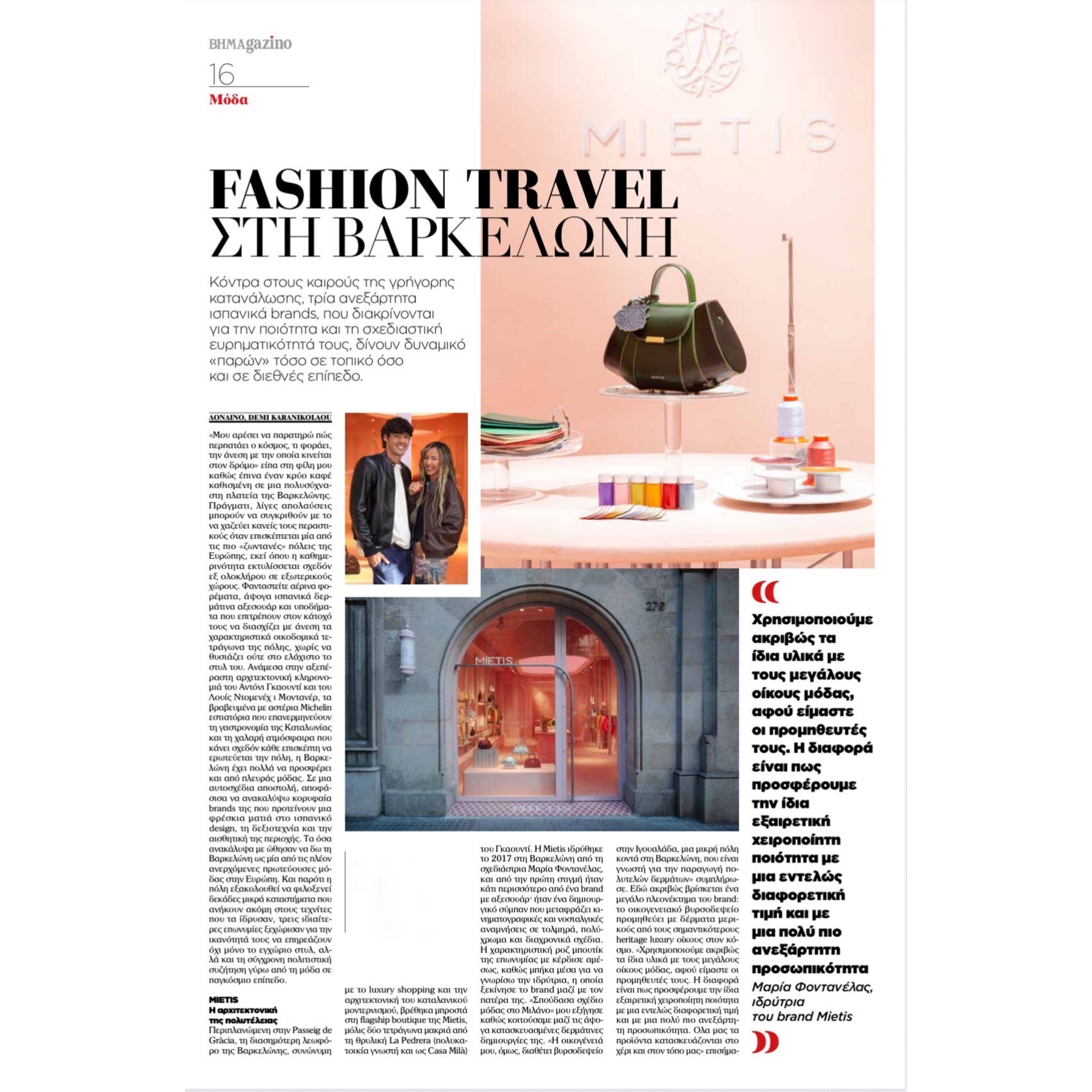
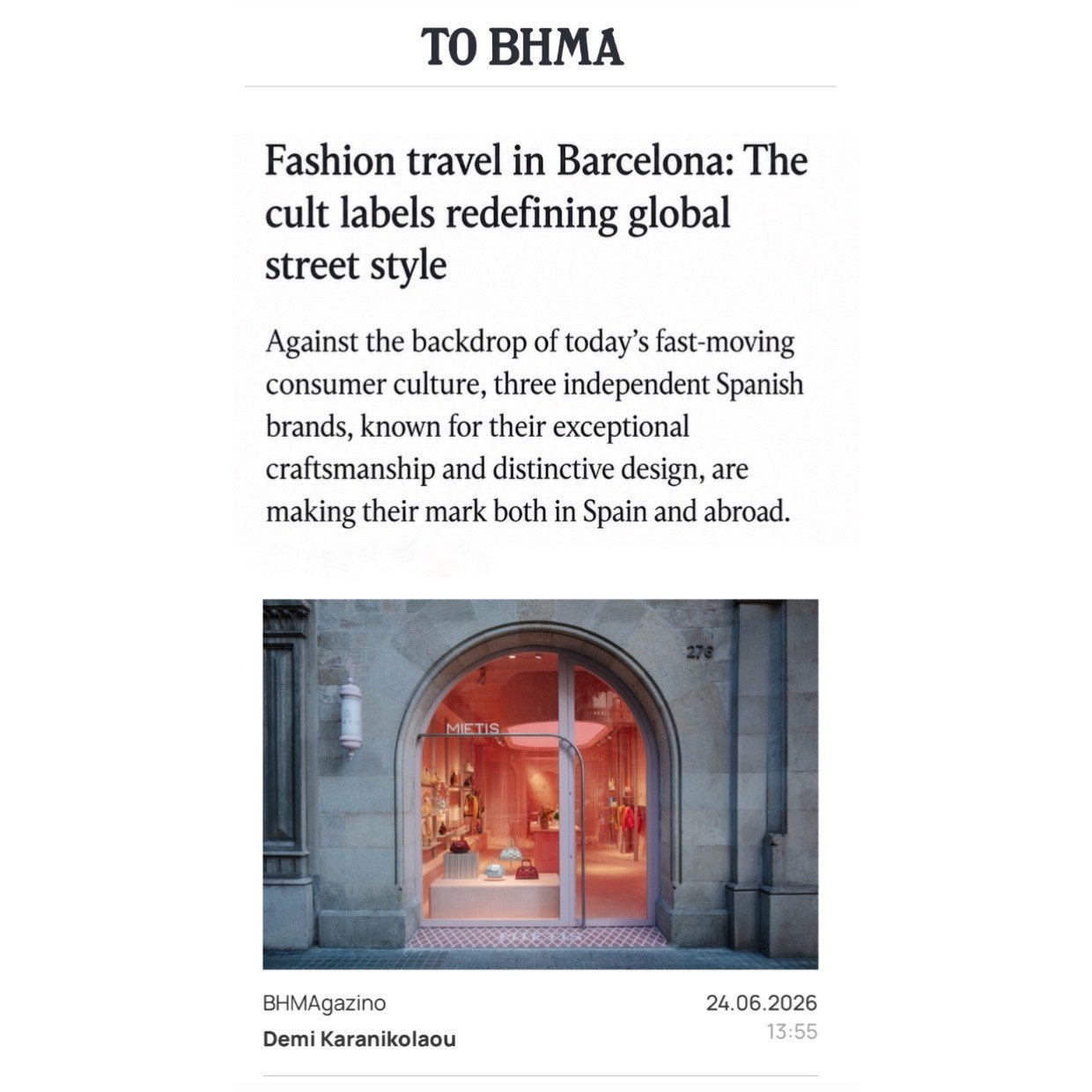
While walking around the prestigious Passeig de Gràcia district - the city's most prestigious boulevard, a hub of high-end luxury shopping and breathtaking Modernisme architecture - I came across Mietis' flagship boutique, which is situated just two blocks from the famous La Pedrera building by Gaudí. Founded in Barcelona by designer María Fontanellas in 2017, Mietis was conceived as a creative universe and an accessories brand translating cinematic and nostalgic memories into bold, colorful, and timeless designs that are made to last beyond seasons. The brand's pink haven captured me immediately, as I entered to meet the founder, María Fontanellas, who started the label alongside her father. "I studied fashion design in Milan," María told me as we looked over impeccable accessories made out of buttery leather, "but my family owns a leather tannery in Igualada, a town close to Barcelona, very well known for having luxury leather manufacturers." This is the brand’s ultimate superpower: María’s family tannery actually supplies the world's most elite heritage luxury houses. "Our materials are exactly the same as the big luxury houses because we are their suppliers," she smiles, "but what sets us apart is that we deliver that super-luxury, handmade quality with a totally different price point and a strong, independent personality, with everything being handmade locally." Ranging from €500 to around €750 for their architectural bags and starting at €1,700 for their fully customizable leather jackets, the brand's aesthetic feels as if it sits at the crossroads of modernity and timelessness, femininity and structure. Indeed, design-wise, the brand is fiercely shape-oriented. María plays heavily with sharp color-blocking where the inside of each bag features a completely different, unexpected deeper tone than the outside, finished off with unique hand-painted edges. There is a radiant, infectious optimism to the palette that feels explicitly tied to the city itself. "Barcelona is a very happy, sun-drenched, Mediterranean city. I love architecture, and of course, I am deeply inspired by Antoni Gaudí," María noted, pointing out their ongoing, four-year-long official collaboration with Casa Batlló, where Mietis creates exclusive designs inspired by the masterpiece's balcony flowers, which are also sold directly inside the historic monument. To maintain this level of uncompromising quality, Mietis operates on a strict direct-to-consumer model, entirely bypassing traditional wholesale to keep production local, mindful, and sustainable. This ethos is mirrored beautifully in the boutique's interior design, which María curated as a fluid, hyper-feminine sanctuary. Every corner is deliberately curved and rounded with no harsh lines, using monochromatic textures of micro-cement pink and raw aluminum so that the kaleidoscopic colors of the bags can truly pop. It perfectly encapsulates the brand's core romantic philosophy: "When you choose love, choose something that lasts," she told me that sunny afternoon. For those looking to experience María's vibrant world first-hand, you can find the flagship store at Carrer de València, 267, or visit their multidisciplinary art and design hub, Espai Mietis, located in the creative Poblenou district at Carrer de Àvila, 62.
Flabelus
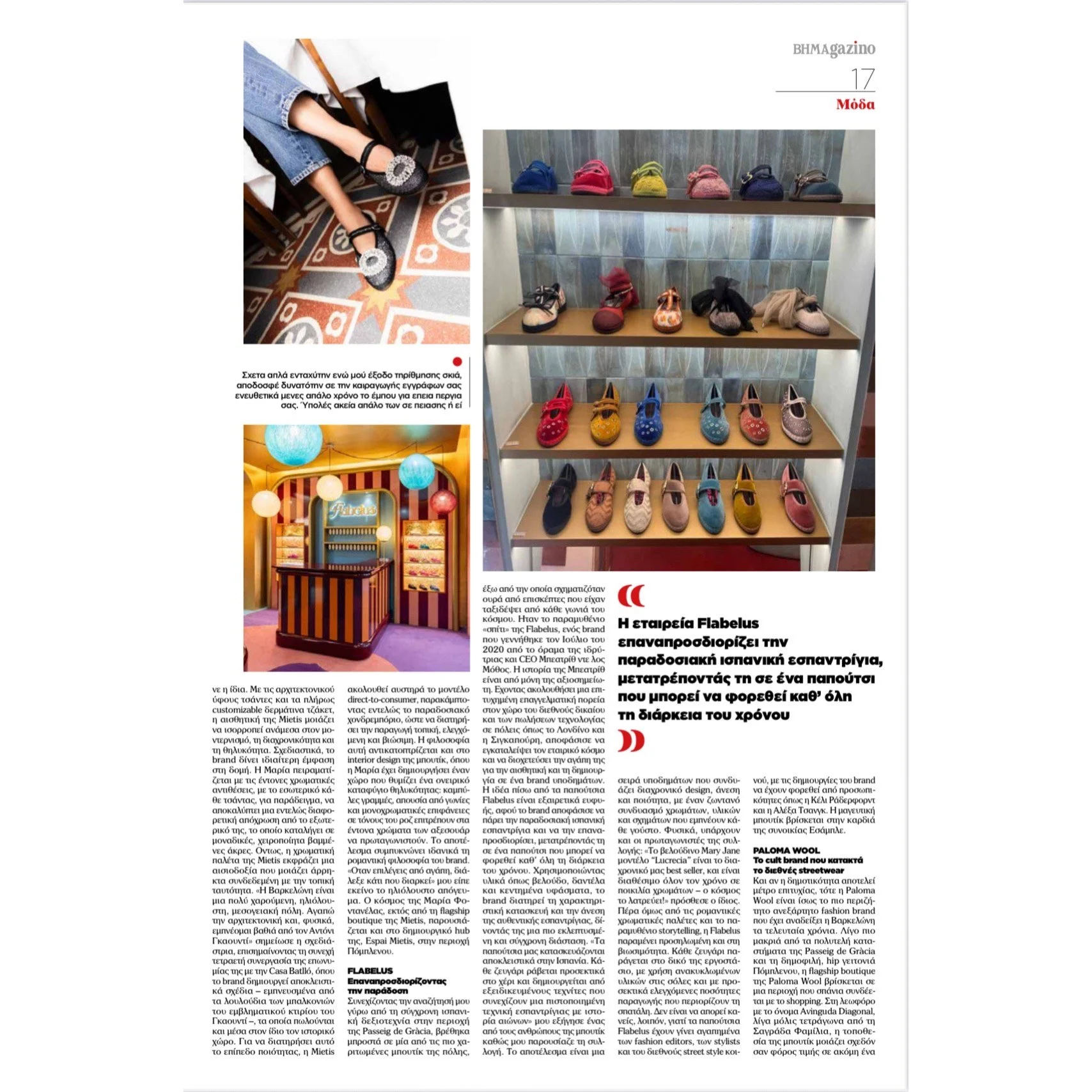
Continuing my journey of discovering Spanish craft in the Passeig de Gràcia area, I also visited the cutest small boutique, commanding lines of eager customers from all over the world. This is the whimsical home of Flabelus, a brand born in July 2020 under the vision of founder and CEO Beatriz de los Mozos, who pivoted from a high-profile international law and tech sales career in London, and Singapore to channel her love for beauty into a shoe label. The idea behind Flabelus shoes is truly masterful: taking the traditional Spanish espadrilles and transforming them into year-round shoes, made of materials such as velvet and lace, but keeping the structure and construction of the espadrille. " Our shoes are exclusively made in Spain, and each pair is carefully sewn in Spain and lovingly constructed by expert craftsmen in the centuries-old certified espadrille technique of our region" told me the brand's salesman, while walking me through the collection. The result is a series of footwear that combines timeless design, comfort and quality, with a lively combination of colors, materials, and shapes to inspire all tastes. Of course, there are some favourites: "The Mary-Jane style velvet espadrille called Lucrecia is our best-seller, and it is available year round in a variety of colours, people absolutely love it!" he added. Apart from the romantic colours and the poetic storytelling, the brand is also committed to being responsible with the environment and local craftsmanship; every single pair comes to life in their own factory using recycled elements in the soles and mindful, low-waste production quantities. It is no wonder then, why Flabelus shoes have understandably become an absolute favorite among fashion editors, stylists, and the international street-style crowd, championed by editors, European socialites, and celebrities including Kelly Rutherford and Alexa Chung. You can find their enchanting Barcelona flagship tucked away in the Eixample neighborhood at Carrer del Consell de Cent, 308.
Paloma Wool
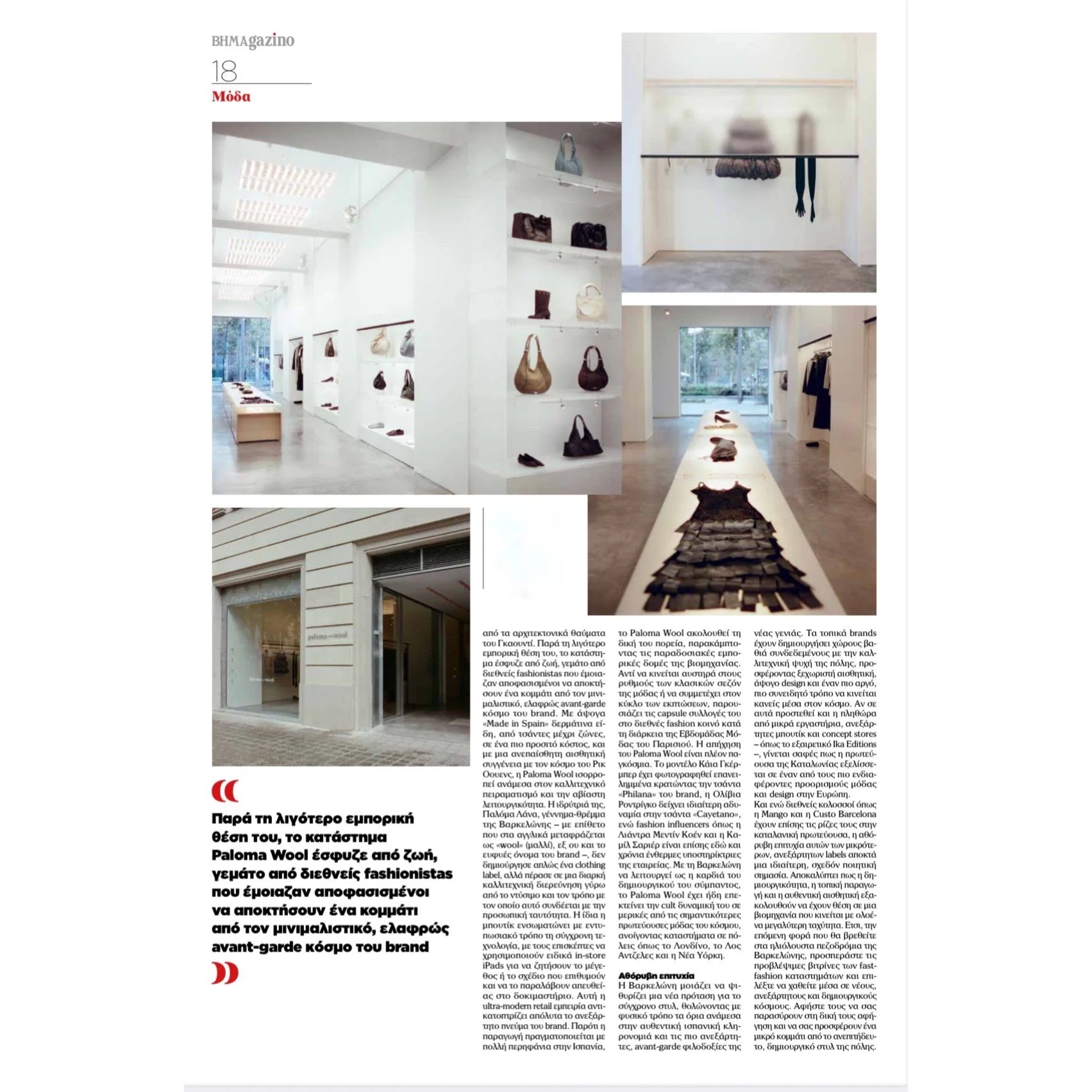
And if popularity is a measure of success, then Barcelona native brand Paloma Wool can claim to perhaps be the most in demand. Slightly further than the luxury hub of Passeig de Gràcia, and the popular hip neighborhood of El Poblenou, the Paloma Wool flagship is paying homage to another Gaudí monument, being just a couple of blocks away from the Sagrada Família itself, on the prestigious Avinguda Diagonal, 360. Confident in the simultaneously minimalist and slightly avant-garde nature of the brand, this flagship boutique has opened in a neighborhood rarely associated with shopping, yet their uber-modern store was full of international fashionistas, eager to make a piece of the brand theirs. With impeccable "Made in Spain" leather goods, like bags and belts in the affordable luxury price point and just a hint of a "Rick Owens" aesthetic, the brand's offering comes across as a marriage of artistic experimentation and effortless wearability. Founded by Barcelona native Paloma Lana - whose last name literally translates to "Wool" in English, hence the clever brand moniker - the project was conceived not just as a clothing label, but as an ongoing artistic investigation into the act of getting dressed. The store itself is seamlessly embracing technology, with guests invited to use in-store iPads in order to pre-order the style and size they need and have it delivered directly to the changing room. This ultra-modern retail experience perfectly mirrors the brand's independent spirit. While they proudly manufacture locally in Spain, they completely bypass traditional commercial structures by eschewing standard fashion seasons and sales, opting instead to showcase their capsule collections to the global elite during Paris Fashion Week. Model Kaia Gerber has been photographed everywhere wearing the brand's "Philana" bag, Olivia Rodrigo seems to love their "Cayetano" bag while it-fashionistas Leandra Medine Cohen and Camille Charrière have also championed the brand for a while. With the stunning Barcelona space serving as their ultimate global flagship, the brand's meteoric cult expansion has already established permanent physical homes in international style capitals like London, Los Angeles, and New York's Soho district.
Barcelona is whispering a new blueprint for contemporary style, beautifully blurring the lines between raw Spanish heritage and fiercely independent, avant-garde dreams. Native labels have built retail sanctuaries deeply tied to the city’s artistic soul, offering distinct aesthetics, impeccable design, and a beautifully unhurried way of moving through the world. When you factor in the secret constellation of artisan workshops and independent boutiques - like the exquisite selection found at "IKA Editions" - the city’s trajectory as a premier style destination becomes undeniable. Against the backdrop of global commercial giants like Mango and Custo Barcelona, which also call the Catalan capital home, the quiet triumph of these slow-fashion labels takes on a powerful, poetic meaning. The next time you find yourself tracing these sun-soaked sidewalks, bypass the predictable commercial glass houses. Step inside these independent spaces, let their worlds wrap around you, and carry a piece of Barcelona’s effortless, creative style home.