
Applause Doesn’t Sustain Business
This article was written by Demi Karanikolaou for the inaugural print issue of The COLD Magazine
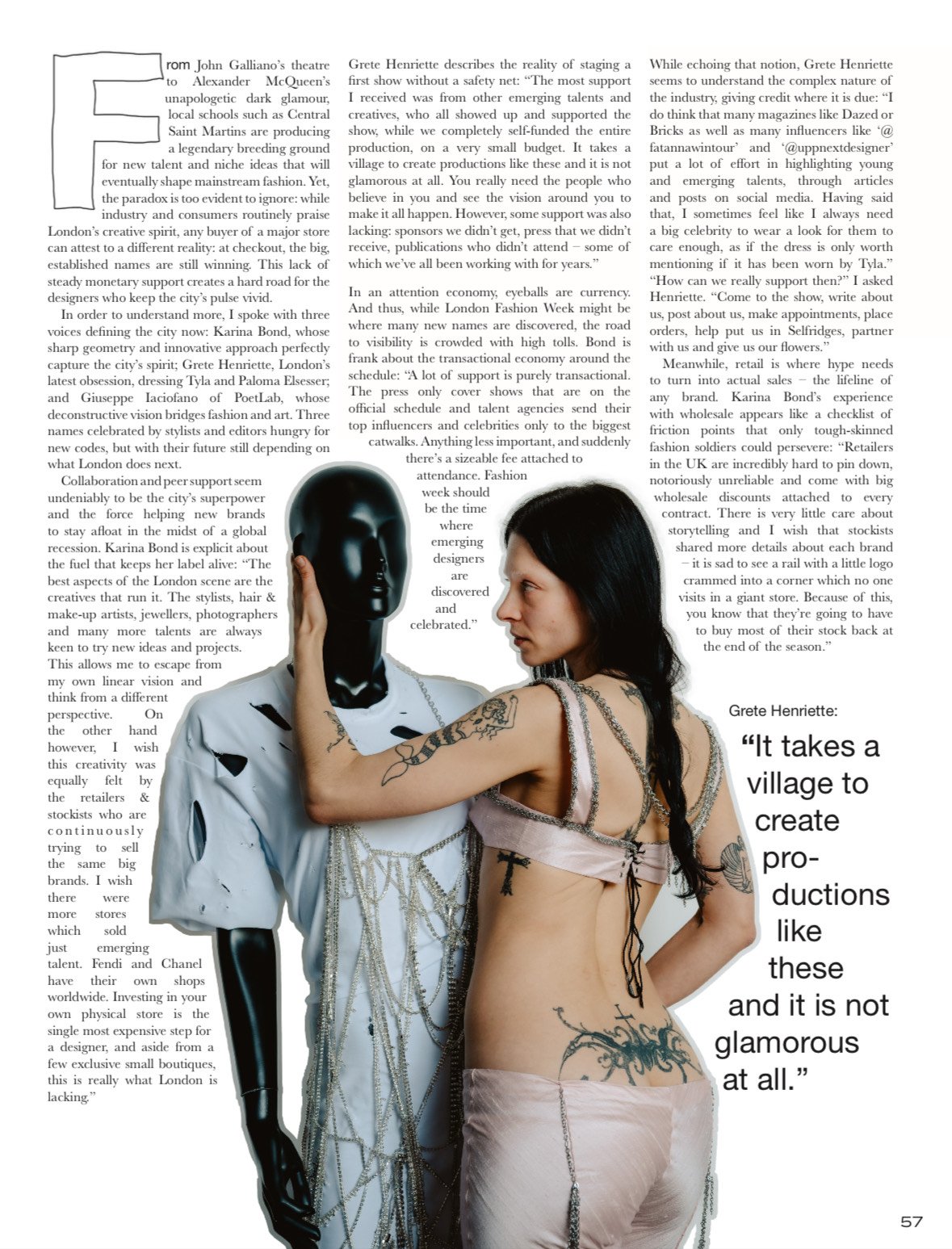
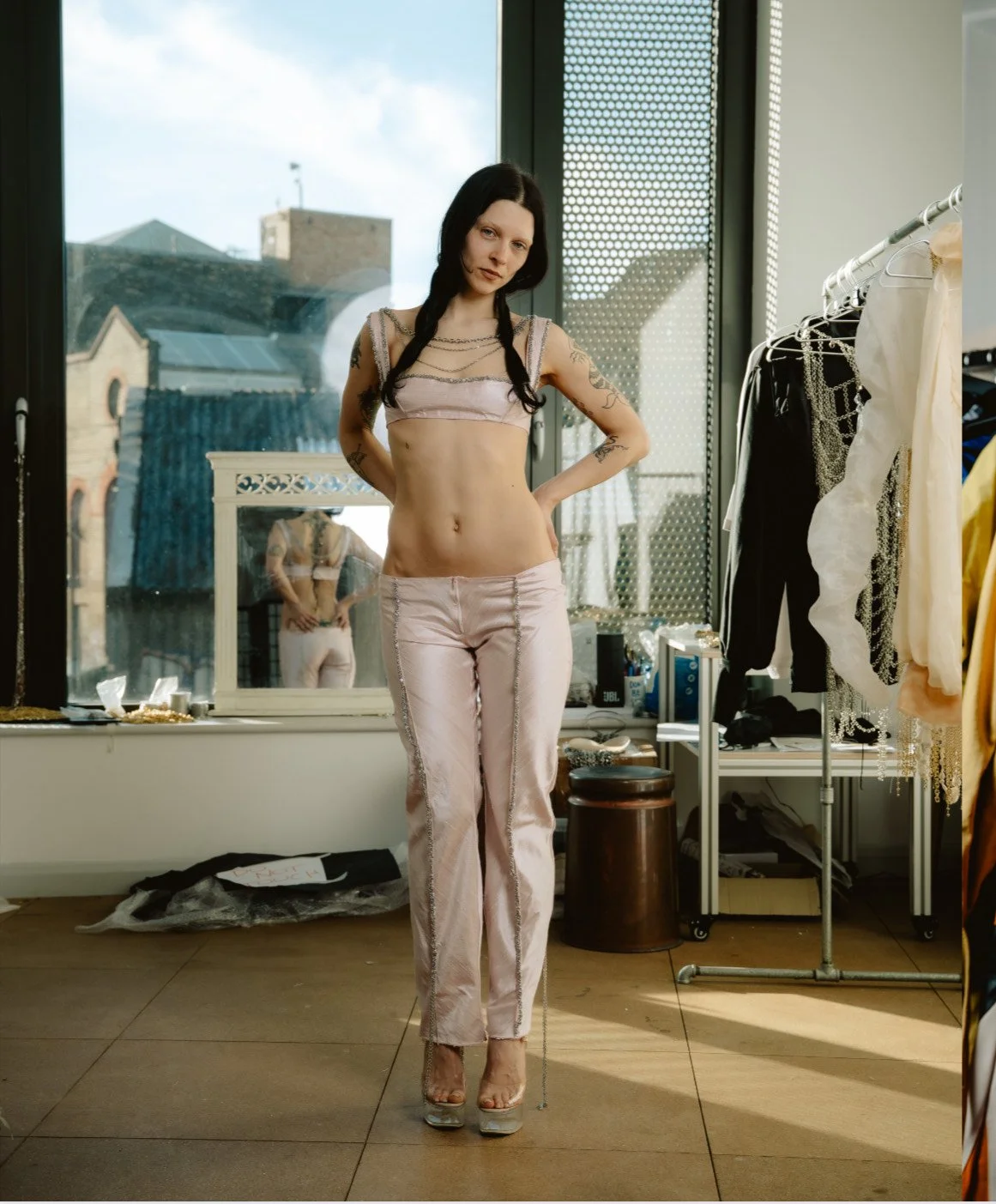
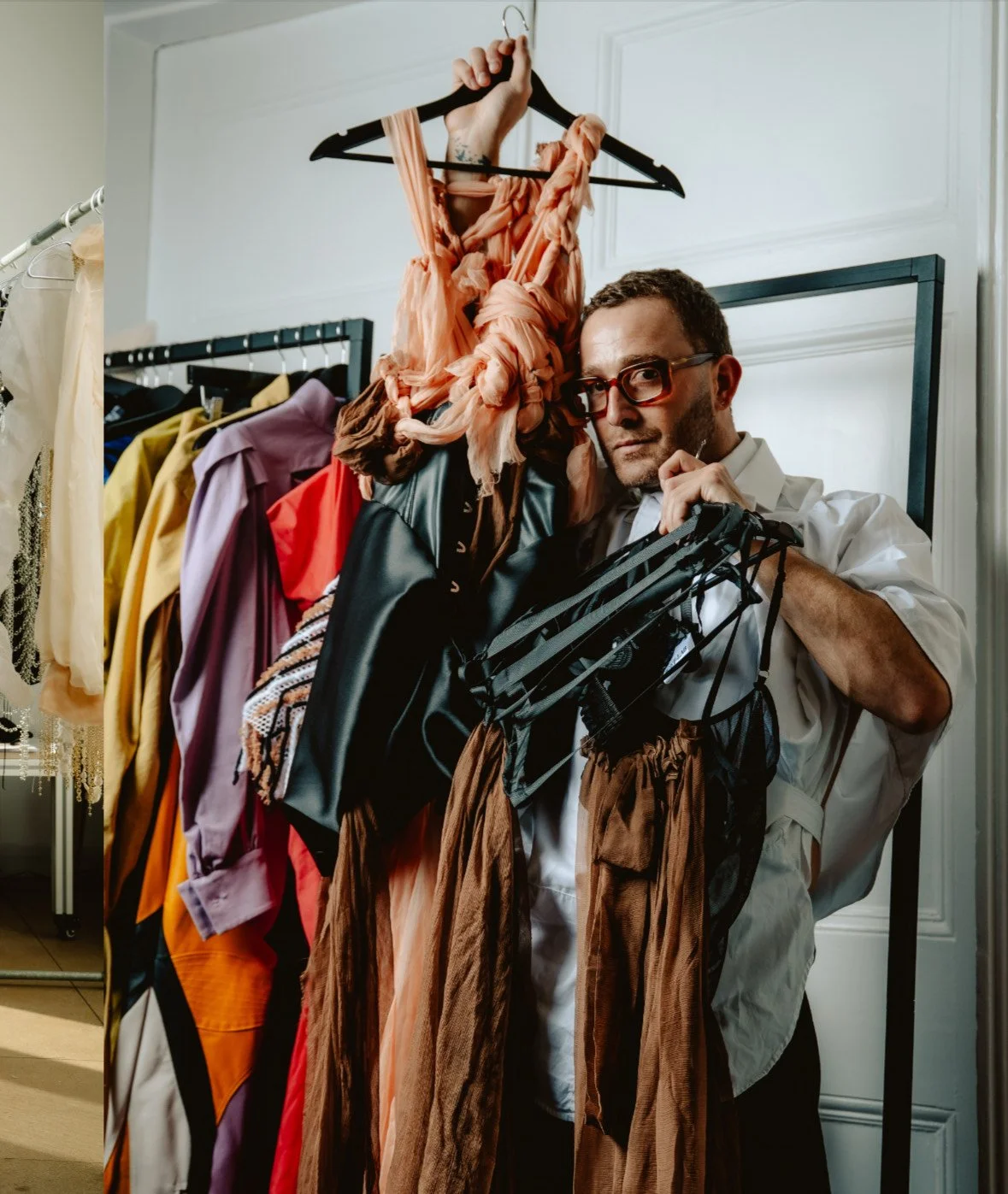
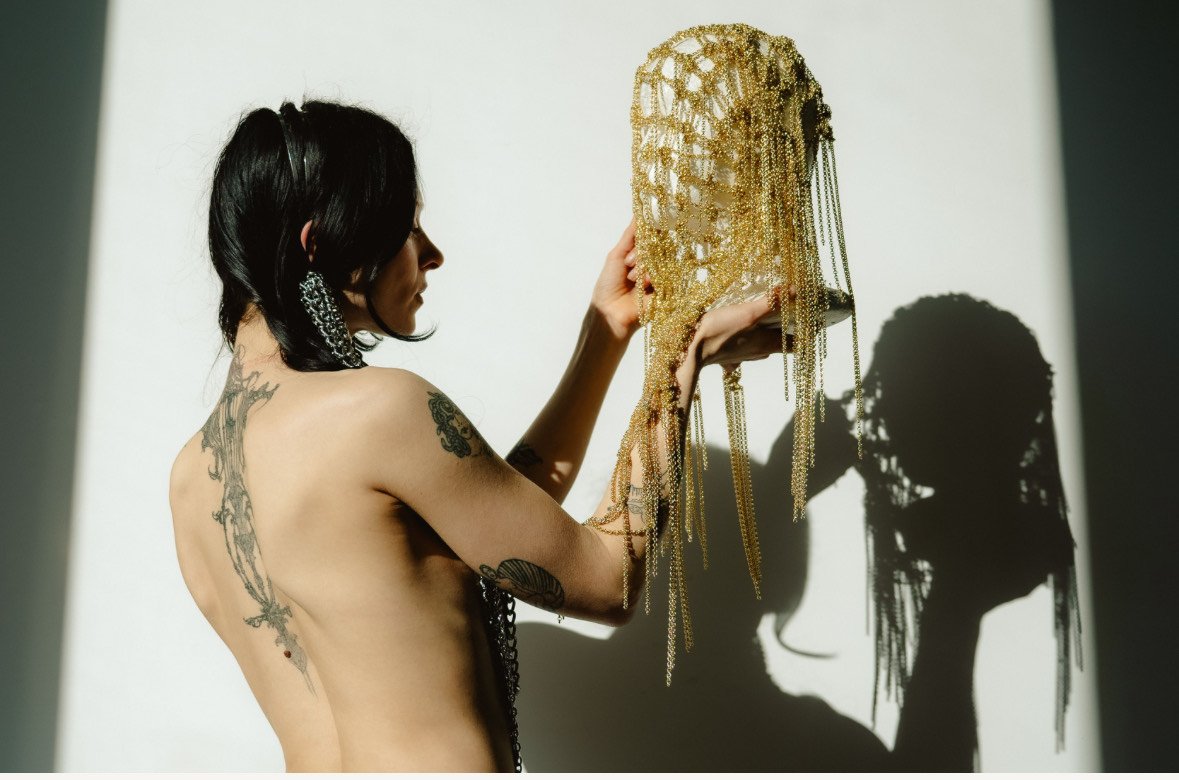
In the midst of city chaos during Fashion Week, fashion people are easy to spot - dressed like exotic birds, they are likely discussing all about the hottest darling designer. Indeed, Burberry might be prestigious, but it is likely one of the new niche names that they are proud to reference. Known as the Mecca of rebellious creativity and innovation, London has long established itself as fashion’s laboratory, a city where risk and invention are seen as a currency. Long before they cross the Channel and find themselves inside the heritage couture houses of Paris, emerging talents from all over the world take their first steps in the English capital, giving the local scene an undeniable air of "cool". From John Galliano’s theatre to Alexander McQueen’s unapologetic dark glamour, local schools such as Central Saint Martins are producing a legendary breeding ground for the new talent and niche ideas that will eventually shape mainstream fashion. Yet, the paradox is too evident to ignore: while industry and consumers routinely praise London’s creative spirit, any buyer of a major store can attest to a different reality: at checkout, the big, established names are still winning. This lack of steady monetary support creates a hard road for the designers who keep the city’s pulse vivid. In order to understand more, I spoke with three voices defining the city now: Karina Bond, whose sharp geometry and innovative approach perfectly capture the city's spirit; Grete Henriette, London's latest obsession, dressing Tyla and Paloma Elsesser; and Giuseppe Iaciofano of PoetLab, whose deconstructive vision bridges fashion and art. Three names celebrated by stylists and editors hungry for new codes, but with their future still depending on what London does next.
Collaboration and peer support seem undeniably to be the city’s superpower and the force helping new brands to stay afloat in the midst of a global recession. Karina Bond is explicit about the fuel that keeps her label alive: “The best aspects of the London scene are the creatives that run it. The stylists, hair & make-up artists, jewellers, photographers and many more talents are always keen to try new ideas and projects. This allows me to escape from my own linear vision and think from a different perspective. On the other hand however, I wish this creativity was equally felt by the retailers & stockists who are continuously trying to sell the same big brands. I wish there were more stores which sold just emerging talent. Fendi and Chanel have their own shops worldwide. Investing in your own physical store is the single most expensive step for a designer, and aside from a few exclusive small boutiques, this is really what London is lacking.” The paradoxical void between creative abundance and commercial support becomes evident through all of our conversations. Grete Henriette describes the reality of staging a first show without a safety net: “The most support I received was from other emerging talents and creatives, who all showed up and supported the show, while we completely self-funded the entire production, on a very small budget. It takes a village to create productions like these and is not glamorous at all. You really need the people who believe in you and see the vision around you to make it all happen. However, some support was also lacking: sponsors we didn’t get, press that we didn’t receive, publications who didn’t attend - some of which we’ve had been all working with for years.”
In an attention economy, eyeballs are currency. And thus, while London Fashion Week might be where many new names are discovered, the road to visibility is crowded with high tolls. Bond is frank about the transactional economy around the schedule: “A lot of support is purely transactional. The press only cover shows that are on the official schedule and talent agencies send their top influencers and celebrities only to the biggest catwalks. Anything less important, and suddenly there’s a sizeable fee attached to attendance. Fashion week should be the time where emerging designers are discovered and celebrated.” While echoing that notion, Grete Henriette seems to understand the complex nature of the industry, giving credit where it is due: “I do think that many magazines like Dazed or Bricks as well as many influencers like @fatannawintour and @uppnextdesigner put a lot of effort in highlighting young and emerging talents, through articles and posts on social media. Having said that, I sometimes feel like I always need a big celebrity to wear a look for them to care enough, as if the dress is only worth mentioning if it has been worn by Tyla.” “How can we really support then?” I asked Henriette. “Come to the show, write about us, post about us, make appointments, place orders, help put us in Selfridges, partner with us and give us our flowers.”
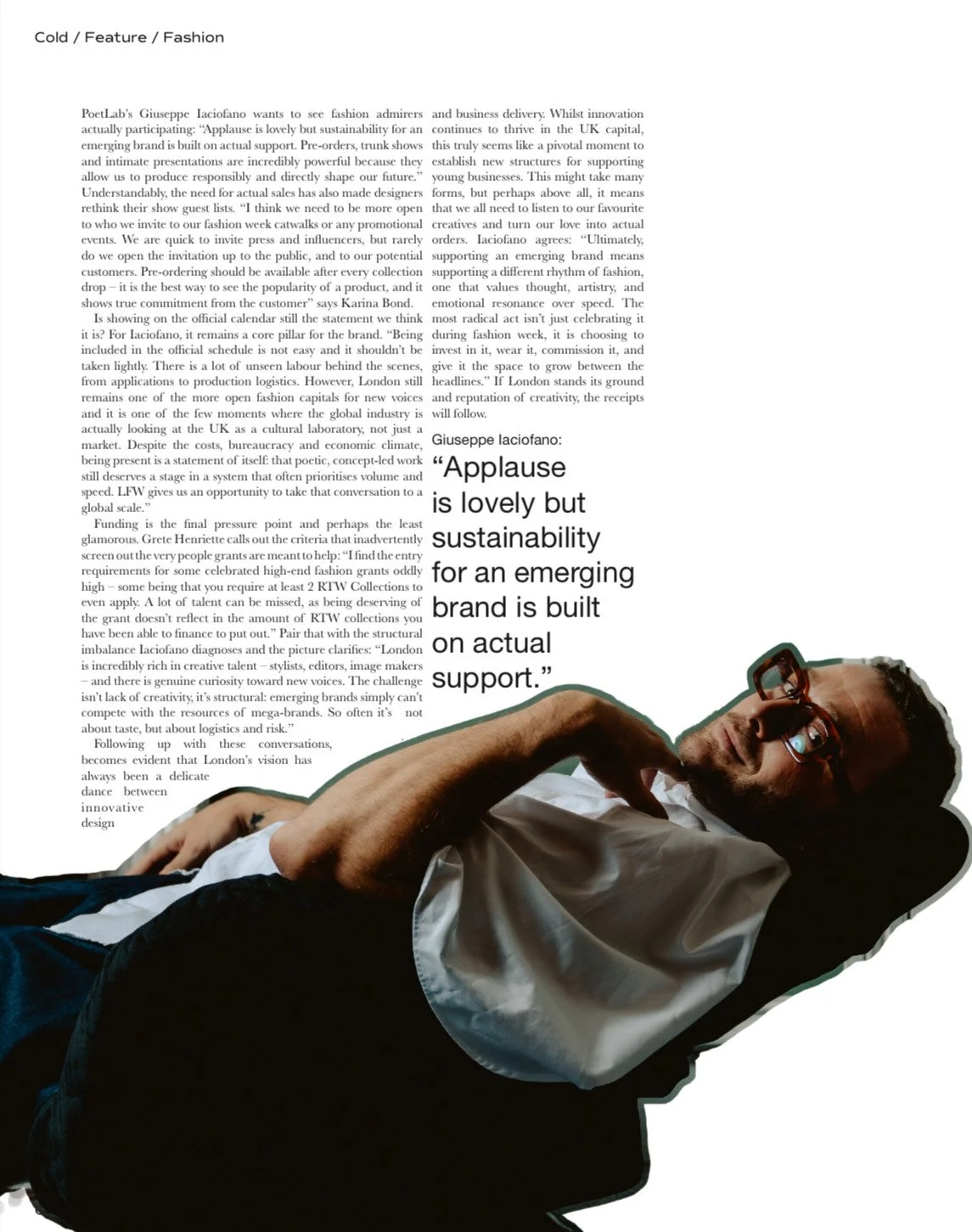
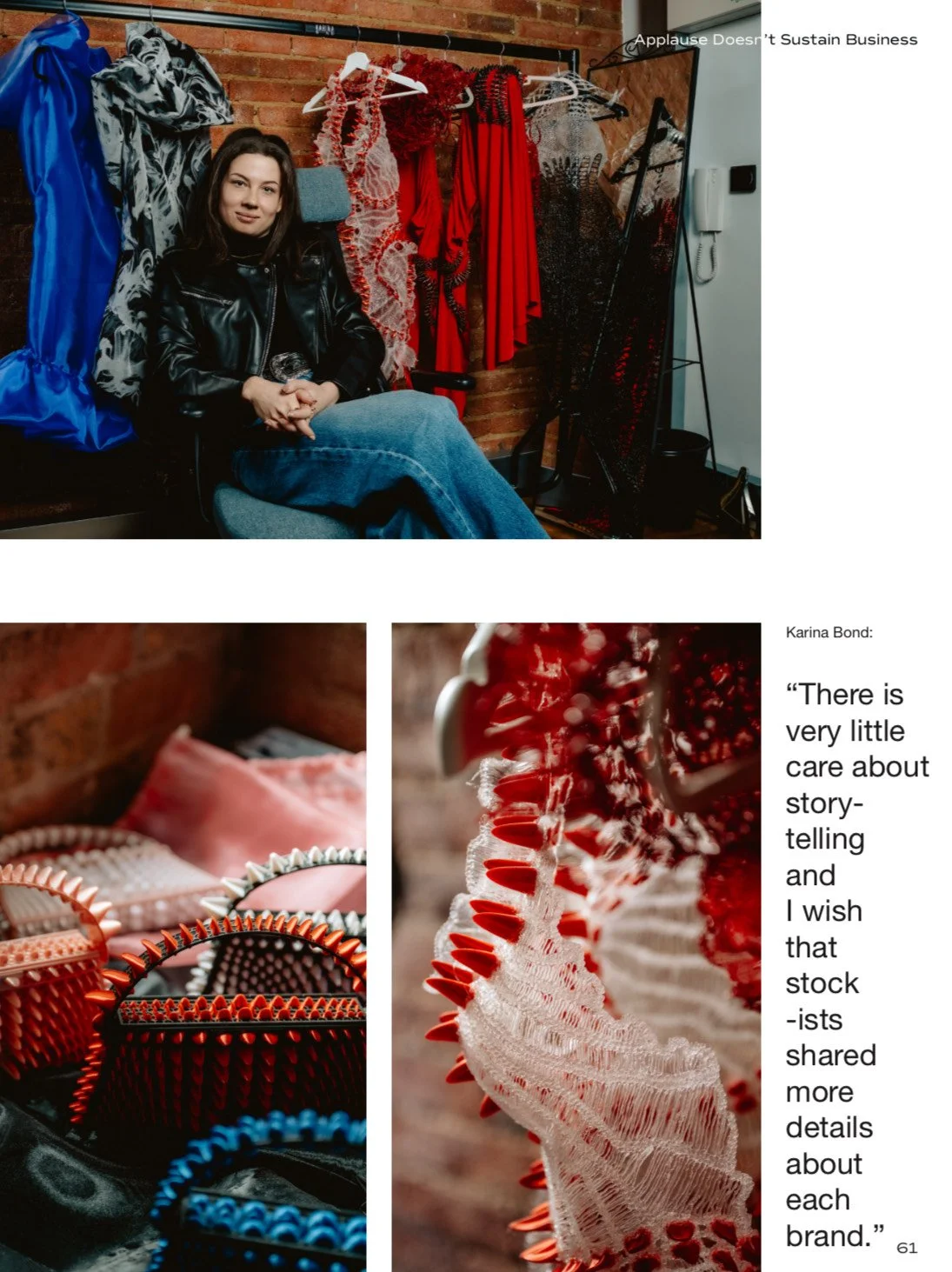
Meanwhile, retail is where hype needs to turn into actual sales - the lifeline of any brand. Karina Bond’s experience with wholesale appears like a checklist of friction points that only tough-skinned fashion soldiers could persevere: “Retailers in the UK are incredibly hard to pin down, notoriously unreliable and come with big wholesale discounts attached to every contract. There is very little care about storytelling and I wish that stockists shared more details about each brand - it is sad to see a rail with a little logo crammed into a corner which no one visits in a giant store. Because of this, you know that they’re going to have to buy most of their stock back at the end of the season.” PoetLab’s Giuseppe Iaciofano wants to see fashion admirers actually participating: “Applause is lovely but sustainability for an emerging brand is built on actual support. Pre-orders, trunk shows and intimate presentations are incredibly powerful because they allow us to produce responsibly and directly shape our future.” Understandably, the need for actual sales has also made designers rethink their show guest lists. “I think we need to be more open to who we invite to our fashion week catwalks or any promotional events. We are quick to invite press and influencers, but rarely do we open the invitation up to the public, and to our potential customers. Pre-ordering should be available after every collection drop - it is the best way to see the popularity of a product, and it shows true commitment from the customer” says Karina Bond.
That prompted me to ask if showing on the official calendar is still the statement we thought it is. Giuseppe Iaciofano insists that for PoetLab, it remains a core pillar for the brand. “Being included in the official schedule is not easy and it shouldn’t be taken lightly. There is a lot of unseen labour behind the scenes, from applications to production logistics. However, London still remains one of the more open fashion capitals for new voices and it is one of the few moments where the global industry is actually looking at the UK as a cultural laboratory, not just a market. Despite the costs, bureaucracy and economic climate, being present is a statement of itself: that poetic, concept-led work still deserves a stage in a system that often prioritises volume and speed. LFW gives us an opportunity to take that conversation to a global scale.”
Funding is the final pressure point and perhaps the least glamorous. Grete Henriette calls out the criteria that inadvertently screen out the very people grants are meant to help: “I find the entry requirements for some celebrated high-end fashion grants oddly high - some being that you require at least 2 RTW Collections to even apply. A lot of talent can be missed, as being deserving of the grand doesn’t reflect in the amount of RTW collections you have been able to finance to put out.” Pair that with the structural imbalance Iaciofano diagnoses and the picture clarifies: “London is incredibly rich in creative talent - stylists, editors, image makers - and there is genuine curiosity toward new voices. The challenge isn’t lack of creativity, it’s structural: emerging brands simply can’t compete with the resources of mega-brands. So often it’s not about taste, but about logistics and risk.”
Following up with these conversations, it becomes evident that London’s vision has always been a delicate dance between innovative design and business delivery. Whilst innovation continues to thrive in the UK capital, this truly seems like a pivotal moment to establish new structures for supporting young businesses. This might take many forms, but perhaps above all, it means that we all need to listen to our favourite creatives and turn our love into actual orders. Iaciofano agrees: “Ultimately, supporting an emerging brand means supporting a different rhythm of fashion, one that values thought, artistry, and emotional resonance over speed. The most radical act isn’t just celebrating it during fashion week, it is choosing to invest in it, wear it, commission it, and give it the space to grow between the headlines.” If London stands its ground and reputation of creativity, the receipts will follow.