
The Return of Yearning: How Romance Took Over Fashion
This article was written by Demi Karanikolaou for Vimagazino / To Vima Greece - print
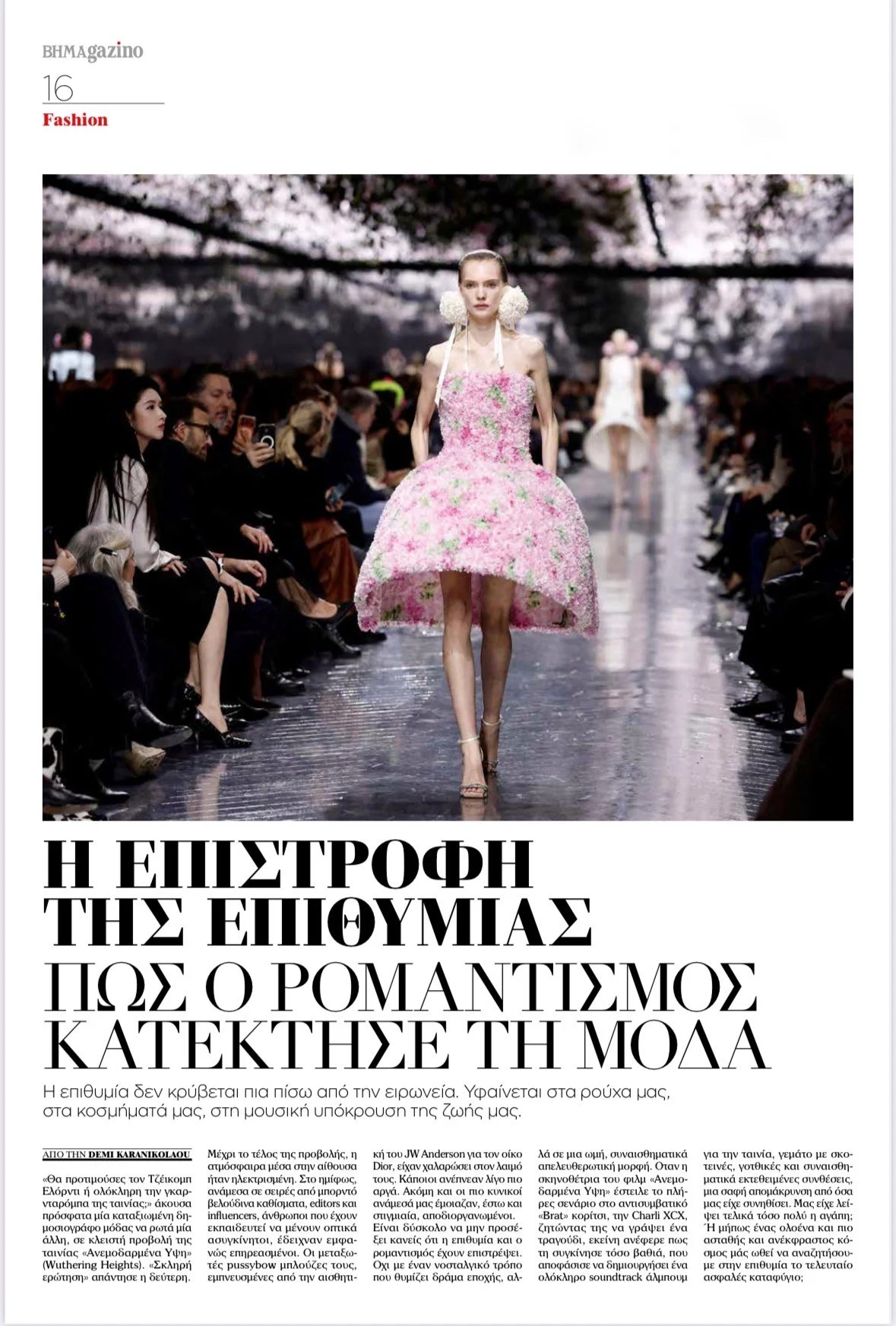
“Would you rather have Jacob Elordi or her entire film wardrobe?” I recently overheard one prominent fashion editor ask another at a press preview of Wuthering Heights. “I find that question genuinely cruel,” the other replied. By the end of the screening, the atmosphere inside the cinema felt electric. In the dim light, among rows of burgundy velvet seats, editors and influencers - people whose job is to remain visually unmoved - looked visibly affected. Their JW Anderson for Dior-inspired silk pussybow blouses had loosened at their necks. Some were breathing a little too slowly. Even the most cynical among us seemed, momentarily, undone. It is hard not to notice that yearning and romance are back. Not in a nostalgic, costume-drama way, but in a raw, emotionally liberating form. When the director of Wuthering Heights sent the full screenplay to unconventional, “Brat” girlie, Charli XCX, asking her to contribute a song, she later spoke about how it moved her so deeply that she decided to create a full soundtrack album for the film, filled with darker, more gothic and emotionally exposed songs - a departure from what we have recently seen from her. Have we truly all missed love that much, or does an increasingly unstable and unsentimental world make longing feel like the last safe refuge we can collectively lean into?
In pop culture, yearning is king - from the hysteria around the queer romance of Heated Rivalry to the upcoming Love Story: John F Kennedy Jr & Carolyn Bessette series. Bow details dominate street style. Romance novels top bestseller lists. In music, artists are embracing confession and longing - Taylor Swift’s The Life of a Showgirl era proclaims, “You dug me out of my grave and saved my heart from the fate of Ophelia.” Across mediums, the mood is similar: a softened gaze, pupils widened by emotion, a willingness to be seen wanting. In a time defined by speed, friction and instability, yearning feels radical because it demands vulnerability. And now it is slipping into our wardrobes.
The runway softens
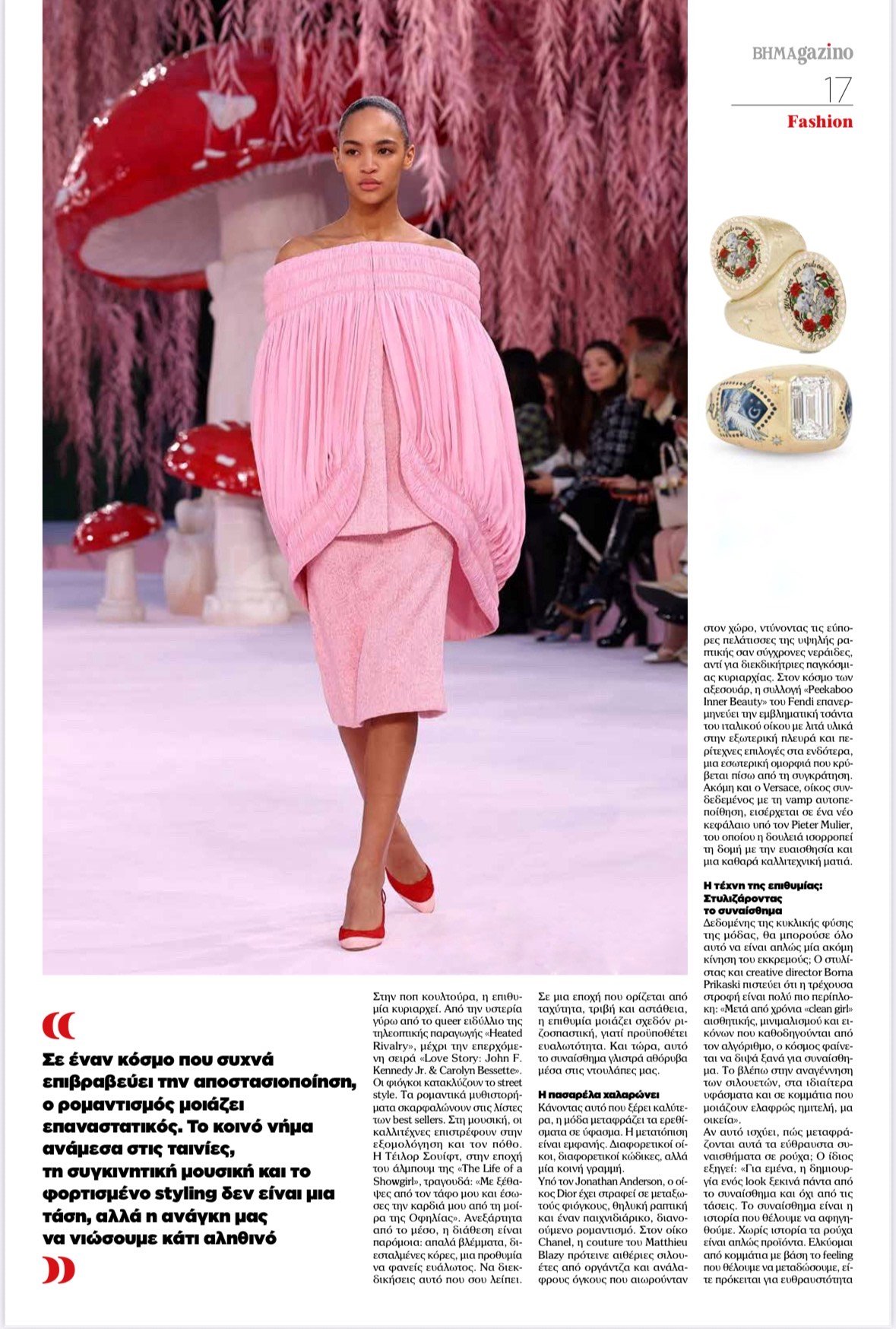
Doing what it does best, fashion translates emotional cues into fabric. The shift is too evident to ignore - different houses and codes, but the same connecting thread. Under Jonathan Anderson, Dior has leaned into silk bows, feminine tailoring and a playful intellectual romanticism. At Chanel, Matthieu Blazy’s couture proposed airy organza silhouettes and weightless volumes that floated through the room, dressing couture clients like modern fairies rather than perpetrators of world domination. For Spring/Summer 2026, Fendi’s “Peekaboo – Inner Beauty” collection reinterprets its iconic bag with a restrained exterior and an ornate interior, inner beauty hidden behind restraint. Even Versace, historically associated with unapologetic vamp confidence, is entering a new chapter under Pieter Mulier, whose work consistently balances structure with sensitivity and an eye for art.
The art of yearning: Styling desire
Given fashion’s cyclical nature, could this simply be another swing of the pendulum? Fashion Stylist and Creative Director Borna Prikaski believes that the current shift is much more complex: "After years of the clean girl vibe, minimalism, and algorithm-driven aesthetics, people seem hungry for emotion again. I see it in the resurgence of silhouettes, tactile fabrics, and pieces that feel slightly undone or intimate." If that is the case, I was curious to know how professionals translate those delicate emotions and desires into garments. Borna Prikaski says that the secret is rooted in intention: "For me, building a look always begins with feeling rather than trend. The emotion is the story we want to tell. If there is no story or emotion behind a garment, then clothes become just products. I feel like I get drawn to pieces based on my current feeling or the feeling we want to convey - whether that’s fragility and softness or power dressing. Transparent fabrics and softened shoulders can communicate desire or vulnerability, in another way a sharp suit can portray strengths."
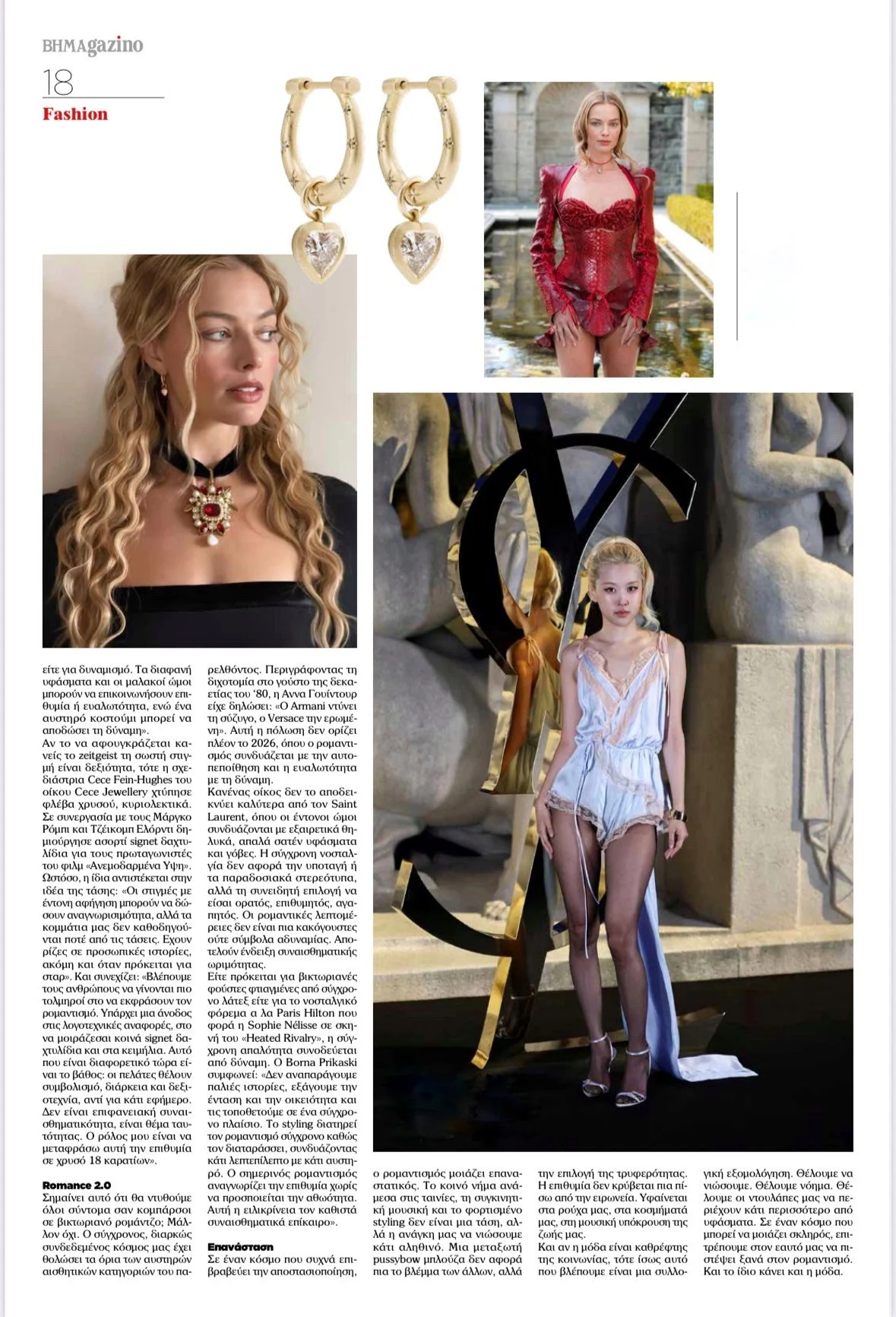
If tapping into the zeitgeist at the right moment is a skill, designer Cece Fein-Hughes of Cece Jewellery struck gold - quite literally. In collaboration with Margot Robbie and Jacob Elordi, she crafted matching signet rings for the protagonists of Wuthering Heights. Yet she resists the idea of trend entirely: "Narrative-rich moments can spotlight meaningful jewellery, but our pieces are never trend-led. They’re rooted in personal stories even for those celebrities." She continues: "Romance has always been central to us, but we’re seeing people become braver about expressing it. There’s a rise in literary motifs, shared signets, poetic engravings and an heirloom revival. What feels different now is the depth, clients want symbolism, permanence and craftsmanship over something fleeting. It’s less about surface sentimentality and more about identity and devotion, expressed proudly. Clients come to us for something deeply individual, based on a feeling, longing, devotion, a film or a lyric. We start with their personal story: the motifs, words and colours that hold meaning for them. My role is to translate that emotion into 18ct gold."
Romance 2.0
Does this mean we should all be preparing to dress like extras in a Victorian romance? Hardly. Our modern, ever-connected online world has blurred the lines between the strict fashion aesthetics of the past. Perfectly describing the dichotomy in taste during the 1980s luxury fashion scene, Anna Wintour famously proclaimed "Armani dresses the wife, Versace the mistress” to describe different brand identities. That polarity no longer defines 2026, where romance is paired with self-assurance, vulnerability with power. No maison demonstrates this better than Saint Laurent, where strong shoulders are paired with ultra feminine, soft satin fabrics in colourful hues and satin high heels with floral details. Modern nostalgia feels less about submission and traditional gender stereotypes, and more about the active decision to be seen, wanted, loved. Romantic details are no longer kitsch or about fragility - they signify emotional literacy.
Whether in Victorian skirts cut from modern latex, or the equally nostalgic Paris Hilton-esque dress worn by Sophie Nélisse in Heated Rivalry, modern softness comes with a side of power. Borna Prikaski agrees: "I think we’re not trying to recreate past stories - we’re extracting the tension, desire and intimacy and placing it in a contemporary context. Styling keeps romance modern by disrupting it: pairing something delicate with something severe - It’s the contrast that prevents sentimentality. Today’s romance is different; it acknowledges desire without pretending innocence. That honesty keeps it from feeling nostalgic and makes it emotionally current."
Revolution
In a world that often rewards detachment, romance feels revolutionary. The common thread between steamy films, moving music and emotionally charged styling is not trend, but the desire to feel something real. A silk pussybow blouse is no longer about pleasing the gaze of others, but about choosing tenderness. Yearning is no longer hidden behind irony. It is woven into our clothes, our jewellery, our soundtracks. And if fashion is always a mirror, then perhaps what we are really seeing is a collective confession. We simply want to feel. We want meaning. We want our wardrobes to hold more than just fabric. In a world that can feel cruel, we are allowing ourselves to be romantic again. And so is our fashion.