
Ludovica Virga, of House of Mua Mua, is the luckiest girl in the world
This article was written by Demi Karanikolaou for Vimagazino / To Vima Greece - print & digital here
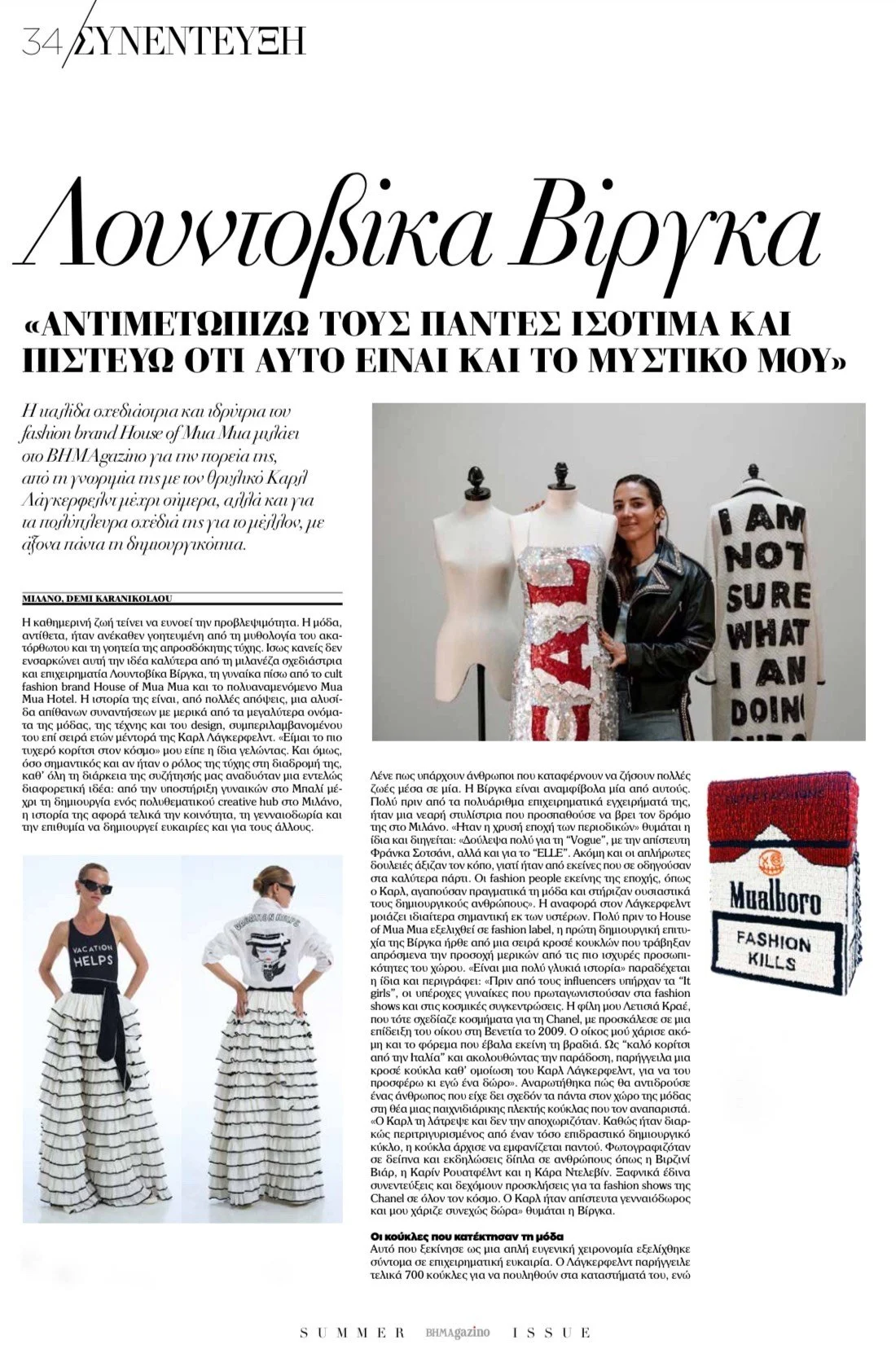
Ordinary life tends to favour predictability. Fashion, however, has always been drawn to the mythology of the impossible and the allure of the lucky break. Perhaps no one embodies that idea more than Milanese designer and entrepreneur Ludovica Virga, the woman behind cult fashion brand House of Mua Mua and the upcoming Mua Mua Hotel. Her story is, in many ways, a chain of improbable encounters involving some of the biggest names in fashion, art and design, including her longtime mentor Karl Lagerfeld. "I am the luckiest girl in the world," Virga told me with a laugh. And yet while luck might have been part of it, throughout our conversation, she repeatedly returned to a different idea altogether. From supporting women in Bali to creating a multidisciplinary creative hub in Milan, her story is ultimately about community, generosity and the desire to pass opportunities forward.
They say that some people manage to live many lifetimes within a single life. Virga is certainly one of them. Long before her various entrepreneurial ventures, she was a young freelance stylist navigating Milan. "It was the golden age of magazines," she recalled. "I did a lot of jobs for Vogue (with the incredible Franca Sozzani) and ELLE - even unpaid ones, but the fun kind that took you to all of the parties. The fashion icons of that era, such as Karl, truly loved fashion and were incredibly supportive of creatives." The mention of Karl Lagerfeld feels particularly significant in retrospect. Long before House of Mua Mua became a fashion label, Virga's first creative success came through a series of crochet dolls that would unexpectedly capture the attention of some of the industry's most influential figures. "It is actually a very sweet story," she laughed. "Before influencers, there were It girls - the fabulous women in fashion shows and social gatherings. My friend Laetitia Crahay, who was designing jewellery for Chanel at the time, invited me to a Chanel show in Venice in 2009. The brand even gifted me a dress to wear. Being a good Italian girl and following tradition, I commissioned a doll in the likeness of Karl Lagerfeld so that I could bring him a present in return."
I wondered how an industry icon who had seemingly seen everything would react to a playful crochet doll made in his own likeness. "Karl adored it and would not let it go," Virga recalled. "Because he was constantly surrounded by such an influential creative circle, the doll was photographed at dinners and parties alongside people like Virginie Viard, Carine Roitfeld and Cara Delevingne. Suddenly I was giving interviews and being invited to Chanel shows around the world. Karl was incredibly generous, showering me with gifts." What began as a simple gesture quickly evolved into a business opportunity. Lagerfeld eventually commissioned 700 dolls to be sold through his stores, and Lady Gaga followed with an order of 500, providing Virga with the capital needed to transform a creative project into a commercial venture, expanding the concept into a full ready-to-wear and accessories label under the name House of Mua Mua. "The idea came from my experience within the fashion industry and seeing how seriously people took themselves," she explained. "I felt that the fun was missing. House of Mua Mua became a way of bringing humour back into fashion, inspired by the legacy of Franco Moschino in the 1980s. Once I realised I could manufacture in Bali, I used those first funds to launch the brand and create clothing that was playful, luxurious and ethically produced."
Bali would also play a defining role in shaping the philosophy behind House of Mua Mua. "When I moved there, you could meet Damien Hirst and David Bowie in the same night, and then a surfer from Australia - everybody was treated the same," she recalled. "There is no notion of who's who in Bali, your surname does not matter. That mentality really shaped my life. I treat everybody the same and I believe that is my superpower." The island would also influence the way she chose to build her business, since at the time, Bali was recovering from economic hardship, prompting Virga to create opportunities for local women and young people through the Mua Mua dolls. "When we started, many of the dolls were made by girls who were still in high school," she explained. "Over time, most of them left because they used the money they earned through Mua Mua to continue their education. One girl even went on to complete a PhD in Japan and now has a wonderful career." Today, doll production is reserved for special projects, but its community-driven philosophy continues to define the brand.
Despite the brand's playful aesthetic, Virga is remarkably candid when discussing the realities of today's fashion industry, as she believes creativity is increasingly under pressure from corporate structures and commercial demands. "Everything is in the hands of marketing and large corporations, designers don't have much power anymore. Many of my friends work for big brands and they are treated like people in finance, which kills creativity." Against this backdrop, Virga takes particular pride in the fact that the House of Mua Mua has remained entirely independent. The brand survived the challenges of the pandemic without taking on debt and continues to operate on a self-sustaining model. "We survived COVID, we continue to stage beautiful shows and we keep moving forward," she explained. That independence may also explain the brand's enduring appeal amongst a loyal international clientele. Over the years, House of Mua Mua has been worn by figures ranging from Cara Delevingne to Madonna, drawn to its playful aesthetic and unapologetically carefree spirit. "I think celebrities have always connected naturally with the brand because it is different," Virga said. "The pieces create iconic looks for holidays and resort destinations. Stylists discover us in boutiques such as Wonderland in Capri and then use pieces for shoots or clients."
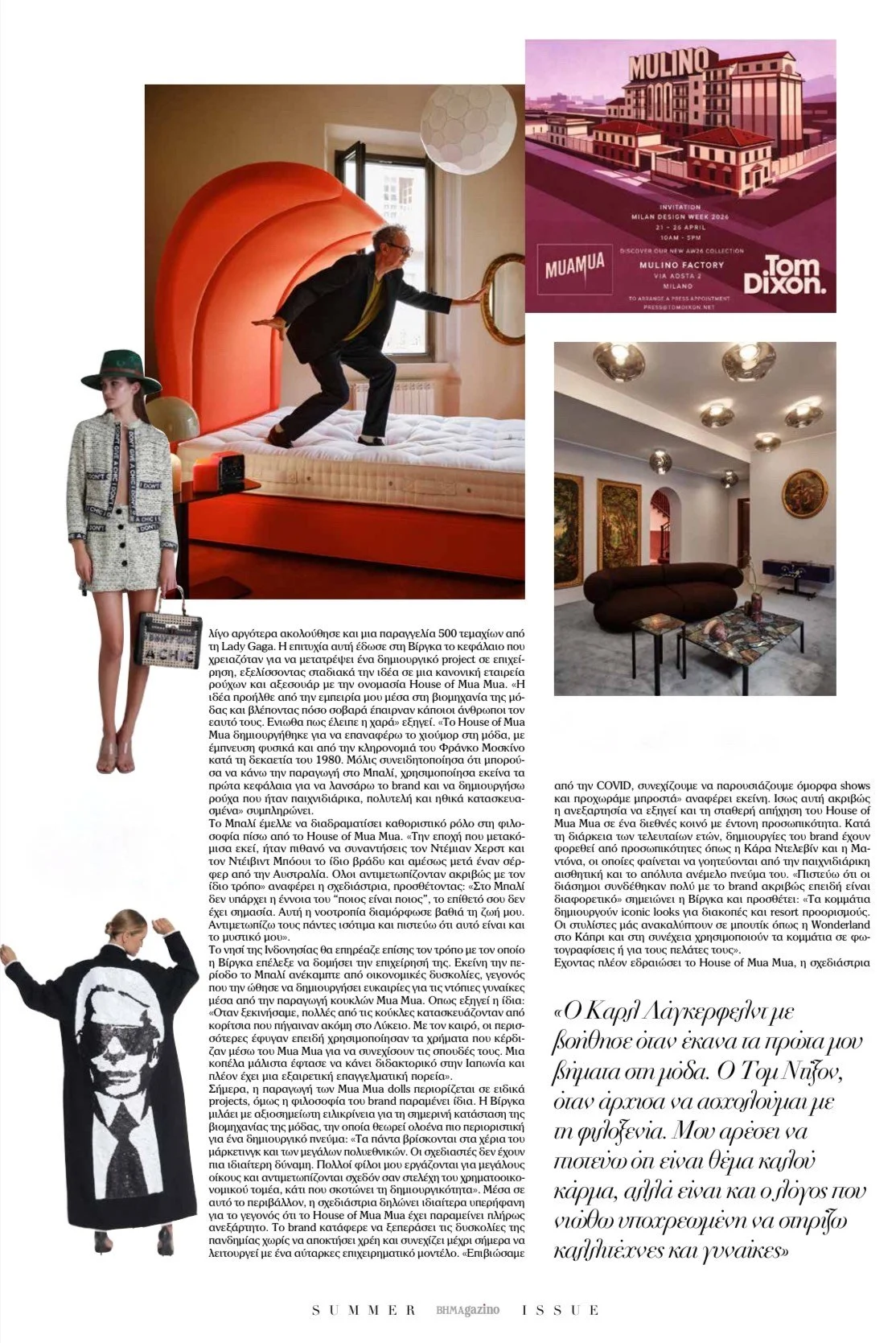
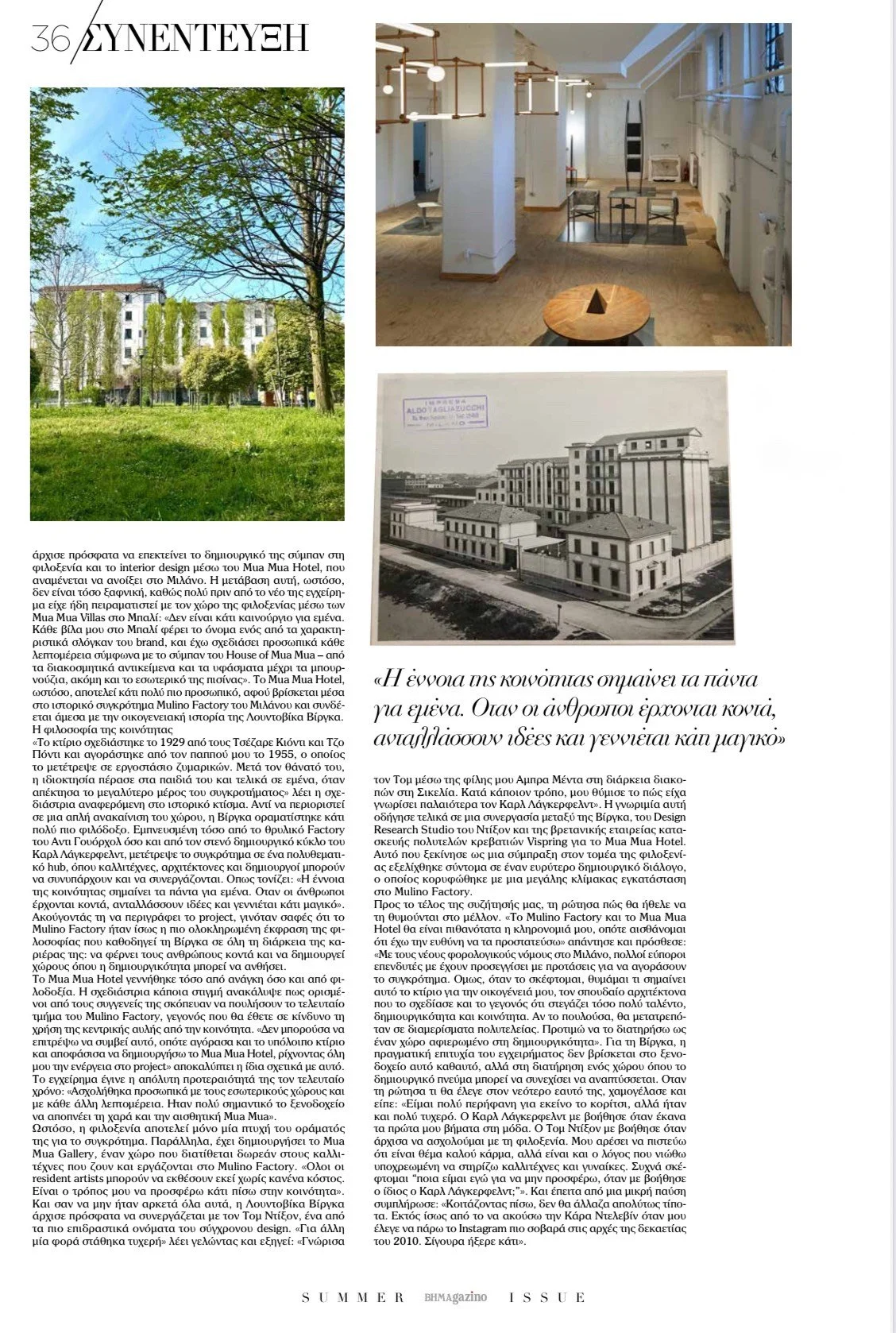
Having established House of Mua Mua as a successful brand, Virga has recently begun expanding her creative universe into hospitality and interiors through the upcoming Mua Mua Hotel in Milan. Yet the transition feels less surprising, as long before embarking on her latest project, she had already been experimenting with hospitality through the Mua Mua Villas in Bali. "I am not new to interior design or hospitality," she explained. "In Bali, each villa is named after one of our signature slogans and I personally designed every detail according to the House of Mua Mua universe - from custom decorative objects and textiles to bathrobes and even a swimming pool featuring one of our iconic quotes." The upcoming Mua Mua Hotel, however, represents something far more personal. Situated within Milan's historic Mulino Factory complex, the project is deeply intertwined with Virga's own family history. "The building was originally designed in 1929 by Chiodi and Gio Ponti and purchased by my grandfather in 1955 who transformed it into a pasta factory," she explained. "After he passed away, ownership gradually passed to his children until I acquired most of the complex." Rather than simply restoring the building, she envisioned something more ambitious. Inspired by both Andy Warhol's legendary Factory and Karl Lagerfeld's close-knit creative circle, she transformed the space into a multidisciplinary hub where artists, architects and creatives could work side by side. "The idea of community means everything to me," she said. "When people come together, they exchange ideas and that's when magic happens." Listening to her describe the project, it became clear that Mulino Factory was not simply a real estate project. It is perhaps the clearest expression yet of the philosophy that has quietly guided Virga throughout her career: bringing people together and creating spaces where creativity can flourish.
The Mua Mua Hotel itself was born out of necessity as much as ambition. Virga explained that she eventually discovered some of her cousins were planning to sell the final section of the Mulino Factory complex, which would have jeopardised the community's use of its central courtyard. "I couldn't let that happen, so I bought the rest of the building and decided to open the Mua Mua Hotel, pouring all my energy into the project." The undertaking became her primary focus throughout the past year "I personally worked on interiors and everything else. It was very important to me that the hotel felt fun and unmistakably Mua Mua." Yet hospitality is only one part of Virga's vision for the complex, since she has also launched the Mua Mua Gallery, a space available free of charge to the artists who live and work within the Mulino Factory community. "Any of the resident artists can exhibit there for free. It feels like my way of giving something back." As if all of this was not enough, Virga has recently found herself collaborating with Tom Dixon - one of the most influential names in contemporary design. "Being lucky once again, I met Tom through my friend Ambra Medda during a holiday in Sicily," she laughed. "In a way, it reminded me of the way I met Karl Lagerfeld." The introduction eventually led to a partnership between Virga, Dixon's Design Research Studio and British luxury bedmaker Vispring for the Mua Mua Hotel. What began as a hospitality collaboration soon evolved into a broader creative exchange, culminating in a large-scale installation at Mulino Factory.
Towards the end of our conversation, I asked Virga how she would like her legacy to be remembered. "The Mulino Factory and the Mua Mua Hotel will probably be my legacy, so I feel a responsibility to protect them," she said. "With the new tax laws in Milan, many wealthy investors have approached me with offers to buy the complex. But when I think about it, I remember what this building means to my family, the great architect who designed it and that it houses so much talent, artistry and community. If I sold it, it would become luxury apartments. I would rather preserve it as a space for creativity." For Virga, the true success of the project lies not in the hotel itself, but in preserving a space where creativity can continue to thrive. When I asked what she would tell her younger self, she smiled. "I am very proud of that girl, but she was also very lucky," she admitted. "Karl Lagerfeld helped me when I was entering fashion. Tom Dixon helped me when I was entering hospitality. I like to think it is good karma, but it is also the reason I feel obligated to give back to artists and women. I often think to myself: who am I not to give back, when I was also helped by Karl Lagerfeld himself?" She paused before laughing. "Looking back, I would not change a thing. Except perhaps listening to Cara Delevingne when she told me to take Instagram more seriously in the early 2010s. She definitely knew something."